Cart
0

If you’ve been deep in the hobby lately, you know that the grading landscape has shifted massively. It’s no longer just about sending a stack of cards to California and waiting a year for a red label. By March 2026, the tech-heavy approach of companies like TAG has forced the "old guard" to step up their game. But for serious investors and collectors at jays poke hub llc, one question remains the ultimate "white whale" of the secondary market: Can you successfully cross over a TAG 10 into a PSA 10?
The potential profit margins are massive. We’re talking about taking a card that is technically perfect (as proven by AI) and putting it into the holder that still commands the highest liquidity and "market premium." But before you go cracking slabs, you need a high-level strategy. This isn't for the faint of heart: it’s for the serious hobbyists looking to optimize their portfolios.
The State of Grading in 2026: Tech vs. Tradition
To understand crossover grading, you have to understand the two titans involved. TAG graded pokemon cards are famous for their "Transparent Grading" reports. When you get a TAG 10, you get a digital report showing exactly why that card is a 10, down to the micron. It’s objective, data-driven, and incredibly consistent.
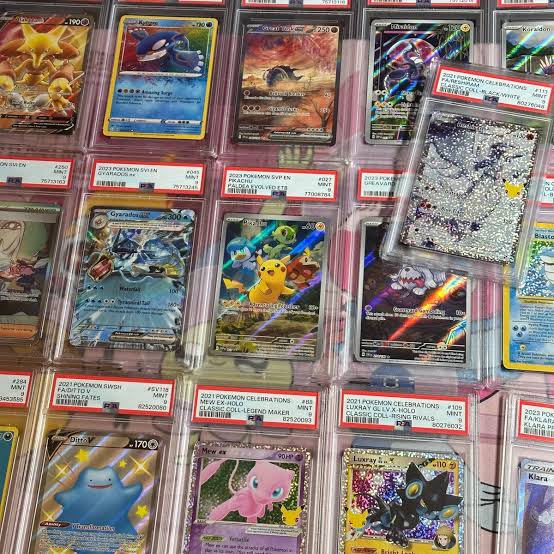
On the other side, PSA graded pokemon cards remain the industry standard for resale value. Despite PSA integrating more technology into their process over the last few years, there is still a human element that collectors pay a premium for. A PSA 10 Gem Mint label is still the most recognized "currency" in the Pokémon TCG world.
So, the logic seems simple: If TAG’s computer says a card is perfect, PSA should agree, right? Not necessarily.

What Exactly is Crossover Grading?
Crossover grading is the process of submitting a card already encapsulated by one grading company to another company (in this case, PSA) to be re-evaluated. You have two main ways to approach this:
- In-Slab Crossover: You send the card to PSA still inside its TAG holder. You specify a Minimum Grade (MG). If PSA deems the card at least that grade, they crack it for you and put it in a PSA slab. If it doesn’t meet the mark, they send it back in the original TAG slab.
- The "Crack and Sub": You manually crack the TAG slab yourself and send the raw card to PSA as a standard submission. This is higher risk but often results in a higher success rate because graders aren't "biased" by seeing another company's high grade.
If you’re looking to protect your investment, check out our FAQ on the best Pokémon cards to see how we handle high-value inventory.
The Technical Challenge: Why TAG 10s Don't Always Cross
The biggest hurdle in crossover grading is the difference in grading standards. TAG uses laser-scanning and AI to measure centering, edges, corners, and surface. If a card is a TAG 10, it is mathematically near-perfect.
However, PSA’s "Gem Mint 10" definition has historically allowed for very slight centering deviations (the famous 60/40 rule) while being much harsher on "eye appeal" and specific types of surface microscopic scratches that a laser might interpret differently than a human eye under a loupe.
In 2026, we’ve seen that PSA graders sometimes "gatekeep" the 10 grade when they see a 10 from a competitor. This is why many high-level collectors prefer the "Crack and Sub" method, despite the terrifying prospect of taking a tool to a perfectly good slab.

High-Level Strategy: When to Attempt the Move
Don’t just cross everything. That’s a fast way to burn through your grading budget. Use this 2026 strategy guide:
1. The Value Multiplier Rule
Only attempt a crossover if the "PSA Premium" is at least 40% higher than the TAG value. For example, if a TAG 10 Japanese Pokémon card is worth $200, but the PSA 10 is hitting $350, the math works. If the gap is only $20, stay in the TAG slab: their slabs are gorgeous and the grading report adds its own type of value.
2. Focus on "Modern High-End"
Cards from sets like VSTAR Universe or the 2026 expansion sets are perfect candidates. Their high manufacturing standards mean a TAG 10 is almost certainly a PSA 10 candidate. If you’re holding a Japanese VSTAR Universe Booster Box, keep an eye on those potential chase cards.
3. Study the TAG Report
Before crossing, look at the TAG sub-grades. If the card got a 10 but the centering was on the edge of TAG's limit, PSA might knock it down to a 9. You want a "Strong 10" for a successful crossover.

The Financial Risk: Don't Get Burned
Here is the truth that many "influencers" won't tell you: PSA charges you the full grading fee regardless of the outcome.
If you submit a card for crossover with a "Minimum Grade 10" and PSA decides it’s a 9, they won’t slab it: but they will still take your $25, $50, or $100 fee. If you do this with a stack of 10 cards and none of them cross, you’ve just lost hundreds of dollars with nothing to show for it but the same slabs you started with.
For serious hobbyists, we recommend checking your cards against our Pokémon card collecting guide before making any big grading moves.
The "Crack and Sub" Methodology (For Experts Only)
If you’ve decided that the in-slab crossover is too conservative, the "Crack and Sub" is the aggressive play. By submitting the card raw, you’re forcing the PSA grader to look at the card with a fresh set of eyes.
Pro-Tip for 2026: Use a specialized slab-cracking tool. Don't use standard pliers; you risk sending a plastic shard straight into the surface of your Umbreon VMAX. Once the card is out, give it a fresh microfiber wipe and a brand-new semi-rigid holder.

Why liquidity matters in 2026
You might ask, "If TAG is more accurate, why bother with PSA?" It comes down to liquidity. In 2026, if you need to move a card fast to fund a new purchase: like a sealed booster box: PSA graded cards sell within hours on most platforms. TAG cards, while growing in popularity, often take longer to find the right buyer who appreciates the tech-first approach.
If you’re building a "forever collection," keep it in whichever slab you prefer. If you’re building a "trading portfolio," PSA is still the king of the mountain.
Final Verdict: Is it Worth It?
Turning a TAG 10 into a PSA 10 is one of the most effective ways to "manufacture" value in the 2026 Pokémon market, but it requires patience and a clinical eye.
Our recommendation? Start with "In-Slab" crossovers for your mid-tier cards to get a feel for how PSA is currently grading. Once you understand the "flow," you can move to cracking slabs for your high-end Japanese chase cards.
Stay up-to-date with the latest market shifts by following our Pokémon blog. Whether you're hunting for the best booster boxes to buy in 2026 or just trying to navigate the grading wars, we’ve got your back.
Ready to find your next grading candidate? Explore our latest TCG expansions and see what's hitting the shelves this week at Jays Poke Hub!