

Cart
0

Nothing kills the "new card smell" faster than realizing that "Grail" you just pulled from a suspicious eBay listing is a total fake. In 2026, the Pokémon TCG market is bigger than ever, and unfortunately, so is the market for "proxies": a fancy word for high-quality counterfeits.
Whether you are hunting for a vintage Charizard or trying to complete your Japanese Pokémon cards collection, knowing how to tell if a Pokémon card is authentic is the most important skill you can have. At Jay’s Poke Hub LLC, we live and breathe authenticity, so we’ve put together this definitive guide to help you spot the fakes before you spend your hard-earned cash.
Why Authenticity Matters (More Than Ever)
The Pokémon TCG isn't just a game anymore; it’s an investment. When you’re looking at high-value hits from the Scarlet and Violet 151 Japanese Booster Box, you’re dealing with cards that have real-world value. Fake cards have zero resale value, they aren't legal in tournament play, and honestly, they just don't look as good on your shelf.
Let’s dive into the physical tests you can perform right now.
1. The Texture Test: Feel the Quality
One of the biggest "dead giveaways" for modern Pokémon cards (think VMAX, GX, Full Arts, and Secret Rares) is the texture.
Authentic modern hits feature a very specific, intricate etched texture. If you run your thumb over a genuine Special Illustration Rare, you’ll feel fine ridges that often follow the artwork: almost like a fingerprint. Most fake cards are completely smooth or have a weirdly "greasy" or glossy feel.
Pro Tip: If it’s a high-rarity card and it’s as smooth as a common Energy card, it’s almost certainly a fake. Counterfeiters find it very expensive to replicate that high-end etching.

2. The Holographic Pattern (The 45-Degree Rule)
The way a card interacts with light tells a story. On authentic English and Japanese Pokémon cards, the holographic "shine" usually runs diagonally. If you tilt the card, the light should move across it at roughly a 45-degree angle.
Many low-quality fakes have a vertical holographic pattern (the light moves straight up and down). Additionally, fake cards often have a "dull" rainbow shine that covers the entire card, whereas genuine cards have vibrant, shifting colors that highlight specific parts of the Pokémon’s art.
3. The "Back of the Card" Test
The back of a Pokémon card is actually much harder to fake than the front. This is where most counterfeiters get lazy.
- Color Consistency: Look at the blue swirls. Authentic cards have a mix of dark navy and lighter "sky" blues with clear transitions. Fakes often look washed out, or the purple/pinkish hues in the swirl look "muddy."
- The Design: Look closely at the Poké Ball. On a real card, the lines are crisp and the "white" part of the ball has a slight bluish tint.
- Border Alignment: Check the borders. While "off-center" cards can happen at the factory, fake cards often have noticeably jagged or uneven borders on the back.

4. The Light Test: Seeing Through the Lies
This is an old-school trick that still works wonders. Pokémon cards are made by sandwiching a thin layer of black graphite between two layers of high-quality cardstock. This black layer makes the card opaque.
If you hold an authentic card up to a bright light (like your phone’s flashlight), very little light should pass through. If you can clearly see the artwork of the front through the back of the card, you’re likely holding a counterfeit made of cheap, thin paper.
Note: Be careful with this test on very old cards or certain Japanese sets, as paper thickness can vary slightly, but for modern sets like Heat Wave Arena, it’s a solid indicator.
5. Font, Spelling, and the "Rosette" Pattern
The devil is in the details. Counterfeiters often struggle with the specific fonts used by The Pokémon Company.
- Typos: You’d be surprised how many fake cards have spelling errors in the attacks or the Pokémon's name. Always read the text!
- Font Spacing: Look for letters that are too close together or fonts that look "thin" or "blurry."
- The Rosette Pattern: If you have a jeweler's loupe or a magnifying glass, look at the ink. Real cards are printed using a "rosette" pattern: tiny, organized dots of ink. Fakes often look like they were printed on a home inkjet printer, showing messy "bleeding" of colors or solid blocks of ink.
6. Comparing Japanese vs. English Authenticity
At Jay’s Poke Hub, we specialize in Japanese Pokémon card singles. It’s important to note that Japanese cards often have a higher production value than English ones.
The cardstock is slightly thinner but sturdier, and the silver borders on modern Japanese cards are much harder for counterfeiters to replicate than the yellow or grey borders of English cards. If you are ever unsure, comparing your card to a known authentic Japanese card from a trusted source is the best way to verify.

7. The Ultimate Safety Net: Graded Cards
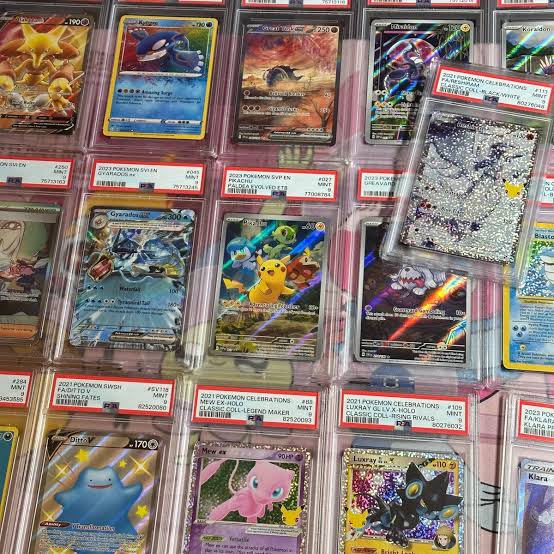
If you’re worried about spending big money on a single card, the safest route is to buy graded Pokémon cards. Companies like PSA, BGS, and TAG act as third-party authenticators.
When a card is "slabbed," it means an expert has already checked the rosette patterns, the light translucency, and the texture for you. You can even check the serial number on the grading company's website to ensure the slab itself hasn't been tampered with. It’s the ultimate peace of mind for any high-end collector.
8. Avoiding the "Resealed" Trap
Sometimes the card inside is real, but the "deal" is a fake. This happens often with sealed Pokémon products.
Scammers will carefully open a booster box, weigh the packs to find the "hits" (the heavy packs usually contain holos), replace them with "dead" packs, and then reseal the plastic.
How to spot a resealed box:
- The Wrap: Authentic Japanese boxes have a very tight, specific heat-shrink wrap with a clean seam. If the plastic feels loose, "crinkly," or has messy glue marks, stay away.
- The Logo: Many English boxes have the Pokémon logo printed on the shrink wrap. If the logo can be rubbed off easily with your thumb, it’s a fake wrap.

The Jay’s Poke Hub Guarantee
We get it: the "wild west" of online marketplaces can be scary. That’s exactly why we started Jay’s Poke Hub LLC. We wanted to create a space where collectors could find the latest products without having to play detective every time they open a package.
Every single item in our general Pokémon cards collection is 100% factory-sealed and guaranteed authentic. We source directly to ensure that when you buy from us, you’re getting the real deal: no exceptions.
Final Thoughts: Trust Your Gut
If a deal seems too good to be true, it probably is. A "Mint Condition" 1st Edition Shadowless Charizard for $50 isn't a "steal": it's a scam.
By checking the texture, holographic pattern, back design, and light translucency, you can protect yourself from 99% of the fakes on the market today. Keep your collection real, keep it high-quality, and most importantly, keep having fun with the hobby.
Ready to add some guaranteed heat to your collection? Browse our all collections page and shop with confidence!


