

Cart
0

Stay sharp—2026 is a different kind of market. Prices move faster, comps update instantly, and “just buy PSA 10s” isn’t a real strategy anymore. If you’re building a serious Pokémon position (for enjoyment and upside), you need a framework that covers the three pillars that actually move your ROI:
- Finding undervalued singles (before the market catches up)
- Grading strategy (TAG vs PSA, and when each makes sense)
- Sealed vs singles allocation (hold, flip, or rip—based on your timeline)
This is the master guide we use at jays poke hub llc—collector-first, data-aware, and built for modern product (especially Japanese) where condition, authenticity, and timing matter.
Quick Specs (Read This First)
- Best for: collectors who want structured investing, not hype
- Core assets: clean modern singles, selective grading, targeted sealed holds
- Primary edge: buying condition + print/run reality, not headlines
- Shop focus: authentic Japanese Pokémon cards, curated card singles, and protected sealed Pokémon products
Master Framework: How TCG Investing Actually Works in 2026
Get your mindset right: you’re not “predicting the next moonshot.” You’re stacking small edges.
Your return usually comes from one (or more) of these:
- Condition edge: you buy cleaner copies than the market priced in
- Timing edge: you buy before demand spikes (set release windows, character cycles, meta shifts)
- Information edge: you understand print reality and grading outcomes better than the average buyer
- Liquidity edge: you choose formats you can exit (raw vs graded, PSA vs TAG, sealed vs singles)
This post consolidates the core playbook: undervalued singles, grading strategy (including TAG vs PSA), and sealed vs singles allocation.
Strategy #1: Finding Undervalued Singles (Without Guessing)
Discover value where the market is lazy. Most people overpay for “the grade” or “the hype.” Investors look for mispriced quality and mispriced demand.
A. Hunt “quality discounts” (the clean copy problem)
Targets:
- raw cards that are strong 9 / possible 10 candidates
- graded cards where the slab brand is discounted vs the card’s demand
Tells you found a quality discount:
- strong centering, clean corners, no obvious surface lines
- seller photos are clear and unflattering (honest listings are gold)
- the price is anchored to average condition, not your copy’s condition
If you’re sourcing from our card singles, you’re already starting from collector expectations—condition and authenticity matter more than chasing the lowest possible price.
B. Buy demand that’s “persistent,” not viral
In 2026, the safest singles aren’t always the loudest. Look for:
- evergreen Pokémon/characters (long-term collector demand)
- cards that display well (art rares / SIR-style modern hits)
- competitive relevance when it’s real, not a one-week spike
C. Use “grading economics” to find mispricing
A raw card isn’t worth “PSA 10 price minus grading fee.” It’s worth:
- expected grade distribution (9 vs 10 probability)
- time + cash tied up during grading
- brand premium (PSA liquidity vs TAG transparency)
That’s where investors get paid: they model outcomes while others eyeball.
Quick rule: if your expected outcome is mostly 9s, you need to buy raw at a real discount—or you’re donating margin.
Strategy #2: Grading as an Investment Tool (Not a Flex)
For decades, grading was a bit of a black box. In 2026, that’s exactly why alternative approaches are winning mindshare: collectors want proof, not vibes.
PSA is still the default liquidity engine. TAG is the transparency engine. The right play depends on your exit plan.

TAG vs PSA (2026): The Investor Decision Tree
Get ready to pick the tool that fits the job. Here’s the clean breakdown:
| Feature | PSA (Professional Sports Authenticator) | TAG (Technical Authentication & Grading) |
|---|---|---|
| Best for | Maximum liquidity / widest buyer pool | Data-backed collecting + modern display |
| Grading method | Human-centric (subjective variability) | AI + computer vision (more repeatable) |
| Transparency | Minimal (grade only) | Full DIG report (defects mapped) |
| Slab aesthetic | Iconic label; recognizable | Clear “glass” look; premium display |
| Market premium | Strongest on vintage + mainstream comps | Strong on modern appeal; growing comps |
| Investor edge | Easier exits, faster sales | Better certainty on “why the grade” |
The debate in one sentence
- PSA is the best “sell it anywhere” slab.
- TAG is the best “know exactly what you bought” slab (and it looks unreal on display).
Decision Tree (use this, not vibes)
Choose PSA when:
- you need the fastest resale / widest audience
- the card is a mainstream comp magnet (especially vintage/WOTC era)
- you’re optimizing for liquidity over documentation
Choose TAG when:
- you care about objective transparency (buying/selling on measurable quality)
- the card is modern and art-driven (display matters)
- you want a slab that reduces “mystery 9” anxiety for buyers
If you’re building long-term, TAG can be a strategic “buy-understood-quality” position while the broader market continues catching up.
Why we lean TAG in 2026: the DIG report = reduced risk
The biggest reason we’re pushing TAG at jays poke hub llc is the DIG (Digital Identification and Grading) report.
When you buy a PSA 9, you’re often guessing: Is it a weak 9? Is there surface stuff I’m not seeing? TAG answers that with receipts. Every card ties back to a QR-linked breakdown of surface, centering, edges, and corners—so you can price the card based on known defects instead of assumptions.
In investor terms: DIG reduces uncertainty, and uncertainty is where people overpay (or get stuck holding the wrong copy). For anyone stacking higher-end graded Pokémon cards, that transparency is a real edge.

The Aesthetic Argument: Let the Art Speak
Let’s be real: the modern Pokémon TCG is all about the art. From Special Illustration Rares to the stunning Art Rares found in VSTAR Universe, these cards are masterpieces.
PSA’s red and white labels are iconic, but they can be distracting. They often clash with the color palette of the card. TAG’s slabs are completely clear and made of high-clarity plastic that feels like glass. The label information is etched directly into the slab, meaning there’s no paper label to fade or peel over time. When you see a Japanese Art Rare in a TAG slab, the card looks like it’s floating in crystal.

Strategy #3: Sealed vs Singles (Hold, Flip, or Rip)
Stay strategic—this is where most “investing” turns into impulse buying.
The real difference
- Sealed is a time capsule: slower, steadier, usually lower maintenance, higher shipping/storage considerations.
- Singles are precision bets: faster repricing, more volatility, more skill-based edges (condition, timing, grading).
Open or Hold (Quick Calls)
Hold sealed when:
- you’re buying clean, untampered product from a trusted source (this matters more in 2026 than ever)
- the set has broad collector appeal (art + characters + chase structure)
- you can store it safely (no dents, no heat, no humidity)
Start with reputable inventory like our sealed Pokémon products—sealed value lives and dies on authenticity and box condition.
Buy singles when:
- you can identify mispriced condition (strong raw, undergraded slabs, or market lag)
- you want to concentrate into specific characters/cards instead of whole sets
- you’re willing to manage grading decisions (TAG/PSA) to unlock premium
Portfolio-style allocation (simple and realistic)
- If you’re risk-off: heavier sealed, selective singles
- If you’re active/experienced: more singles + grading plays
- If you’re cashflow flipping: singles + PSA liquidity routes (with some TAG buys where transparency creates a pricing edge)
Strategic Take (2026): Why TAG is gaining ground and why PSA still matters
At the CEO desk here, we look at outcomes, not narratives. PSA still commands a premium in the most liquid parts of the hobby—especially older cards where buyers default to PSA comps.
But modern collecting is shifting. Collectors are tired of mystery grades and feel-based pricing. TAG’s transparency, consistency, and clean presentation are pulling serious shelf space.
Our take:
- PSA is still the quickest exit.
- TAG is the clearest “buy quality with proof” play—especially for modern Japanese hits where surface nuance matters.
That combo is the blueprint: use PSA when you need maximum liquidity, and lean TAG when transparency and aesthetics increase buyer confidence (and you want a cleaner long hold).
How to Find Undervalued Graded Deals (TAG and PSA)
Discover mispricing where most buyers don’t look.
- Look for “grade brand gaps”: the same card can have a pricing gap just because it’s TAG instead of PSA. If demand for the card is strong, that gap can be opportunity.
- Use TAG DIG reports as a cheat code: scan the QR and check why it missed. A tiny centering knock can be a display-perfect buy at a discount.
- Target clean 9s with strong eye appeal: some 9s present better than average 10s in the wild. Eye appeal sells.
- Buy the card, not the label color: in 2026, the market is getting smarter. Quality with proof tends to win long-term.
For vetted inventory, keep an eye on our graded Pokémon cards page—we curate like collectors because we are collectors.
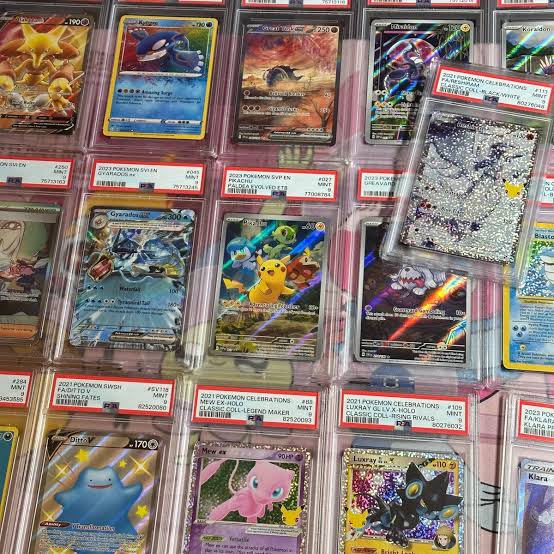
Why Authenticity Matters (Especially in 2026)
With the rise of high-quality fakes, especially in the Japanese market, having your cards authenticated is no longer optional: it’s a requirement. Whether you choose TAG or PSA, the goal is to protect your investment.
We’ve seen a lot of "repacked" boxes and "trimmed" cards lately. That’s why we always emphasize starting with sealed Pokémon products from reputable sources. Once you pull that chase card, getting it into a TAG slab is the best way to ensure its value is preserved for the next decade.
Final Blueprint: Put It All Together
Get ready to run a real plan—not a hype cycle.
If you want maximum liquidity (quick exits):
- prioritize PSA for broad buyer confidence
- focus on mainstream chase singles and clean comps
If you want the smartest long hold (quality with proof):
- lean TAG for transparency + display
- use DIG to buy with conviction (and sell with receipts)
If you want balance (most investors):
- hold selective, clean sealed (authentic + well-stored)
- stack targeted singles where you can identify condition/value gaps
- grade strategically: PSA for speed, TAG for clarity and collector confidence
Want to build your position with trusted product? Shop:
If you want a second set of eyes on a grading decision (TAG vs PSA) or a sealed vs singles plan, hit us up on our contact page. We’re always down to talk shop.
Stay collecting, stay strategic, and let’s keep the hobby healthy.
Want to learn more? Check out these resources:


